Saturday, May 17, 2014

A Pair of Jamaican Near-Endemics

Jamaica has 28 endemic bird species, but several more are range restricted to only one or a few other Caribbean islands.

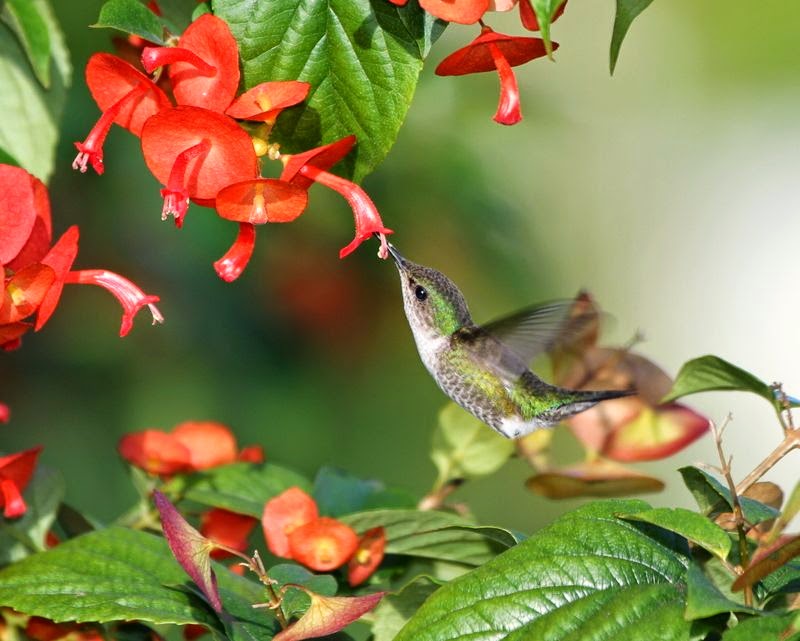
Vervain Hummingbird

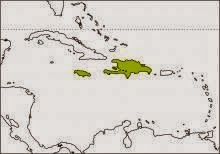
For example, Vervain Hummingbird (Mellisuga minima) is range restricted to Jamaica and the island of Hispaniola (Haiti & the Dominican Republic). Vervain Hummingbird has the distinction of being the second smallest bird in the world, being only slightly larger than its sister species the Bee Hummingbird (Mellisuga helenae), a Cuban endemic.


Another Jamaican near-endemic is the Jamaican Oriole (Icterus leucopteryx).
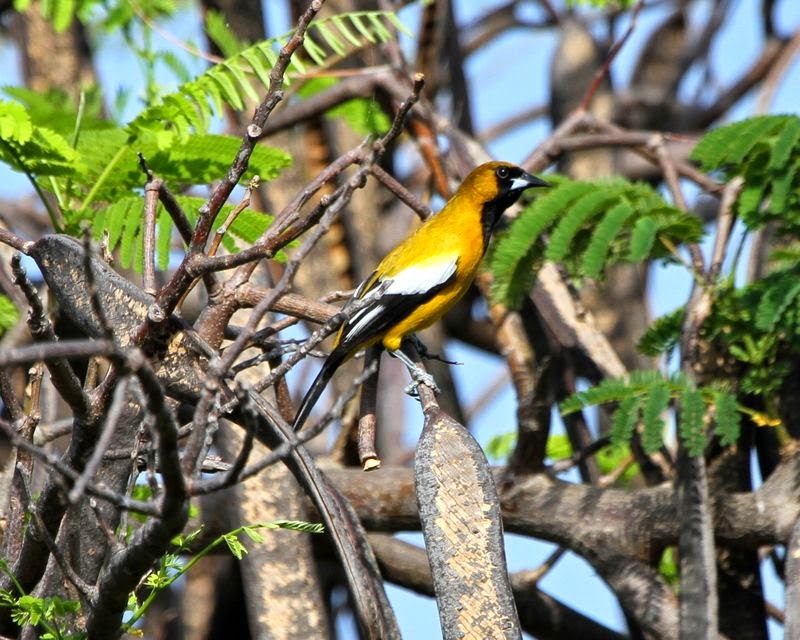

Jamaican Oriole

This one really ought to be considered a Jamaican endemic since the only other place it occurs is the island of San AndrĂ©s, a small (57 km2) Columbian possession 800 km southwest of Jamaica.
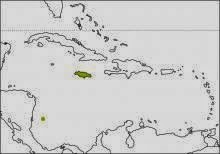

Jamaican Oriole (a.k.a. "Baird's Banana-bird") also formerly occurred on the island of Grand Cayman; the last known individual was collected as a specimen by ornithologist James Bond on March 6, 1930.

Saturday, May 10, 2014

Jamaica, West Indies

Jamaica is not a major birding destination, but because of family connections as well as a life long involvement with visiting and at one point residing and working on the island, it is one of my personal favourites. 


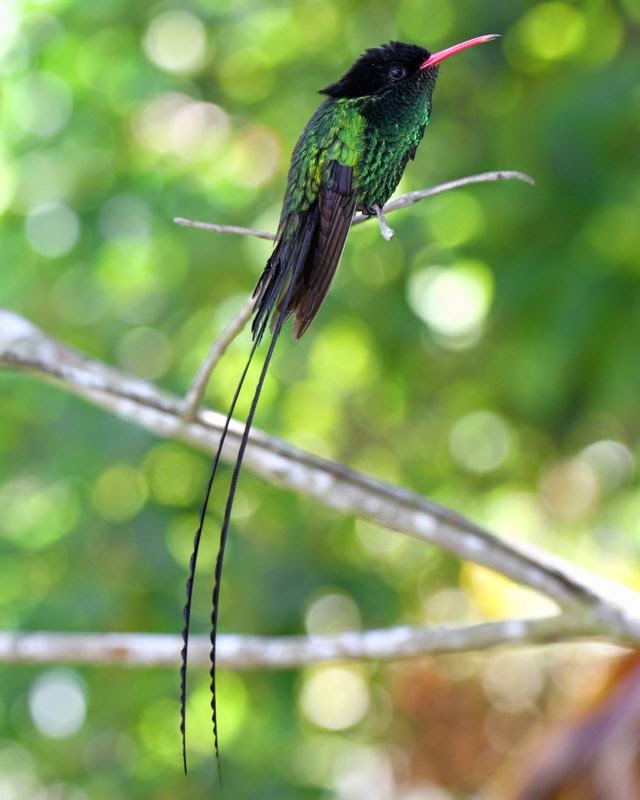
Streamertail (Jamaican endemic)

Studies of island biogeography have revealed that the more distant an island is away from its nearest neighbour, the fewer species will inhabit it and the greater will be its rate of endemism.  Jamaica illustrates this theory nicely: according to the Clements Checklist, a modest 327 bird species have been recorded in Jamaica of which 28 occur nowhere else in the world. That is an endemism rate of almost 10%.


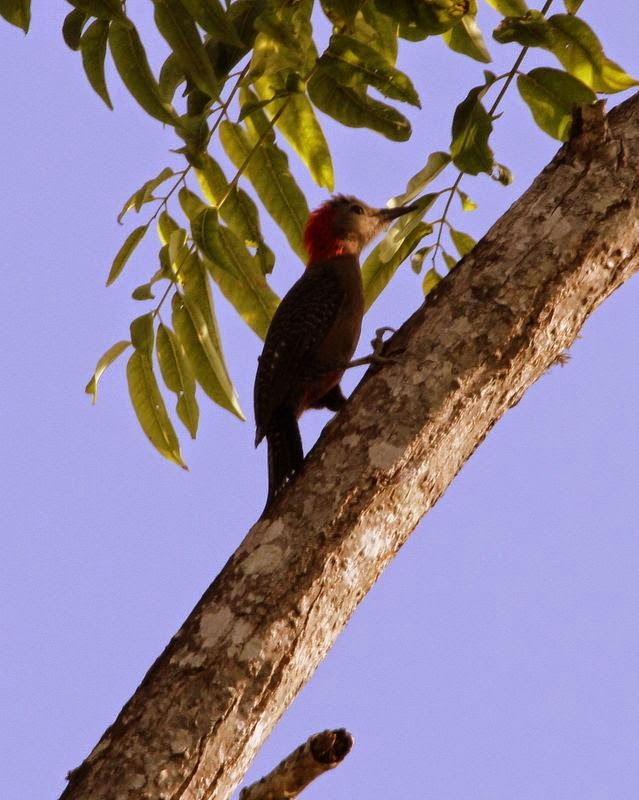
Jamaican Woodpecker (Jamaican endemic)

With a land mass of a mere 11,000 km2 that is a high rate of endemism indeed. Consider that the Province of Ontario, which has a land mass of 100 times that of Jamaica has a bird endemism rate of 0%.


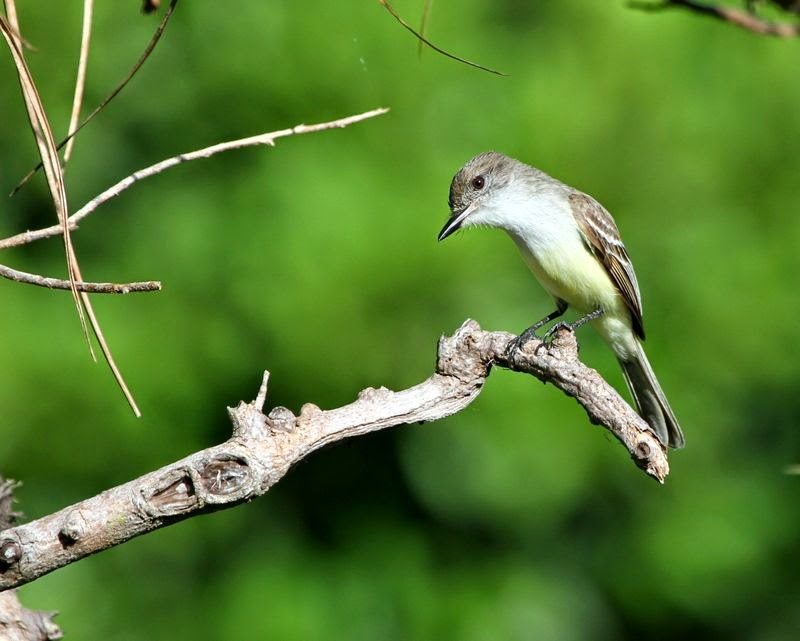
Sad Flycatcher (Jamaican endemic)

The pattern is similar across the islands of the Caribbean; a modest number of bird species to be encountered, but with comparatively high precinctivity.


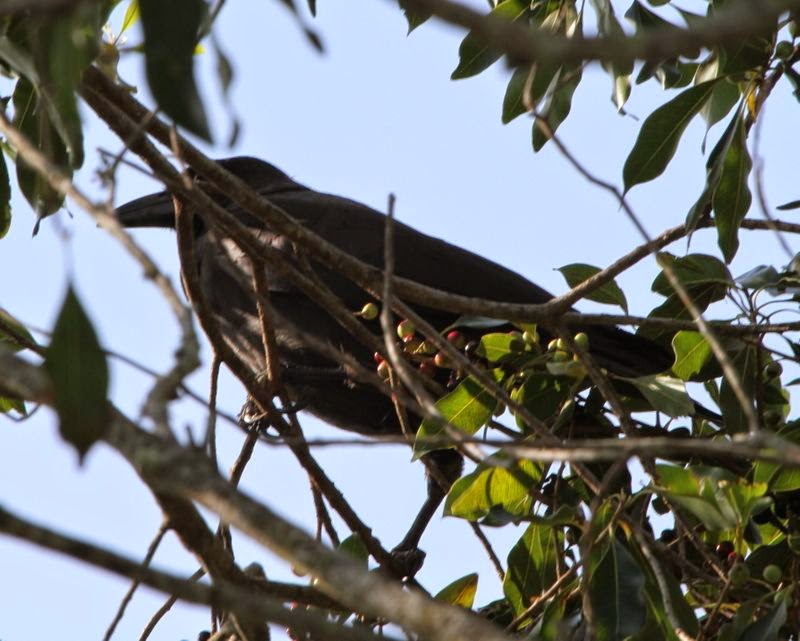
Jamaican Crow (Jamaican endemic)

In addition to the large proportion of species that are unique to one particular island nation, there are a large number of regional endemics, native to only a few islands in the West Indies.

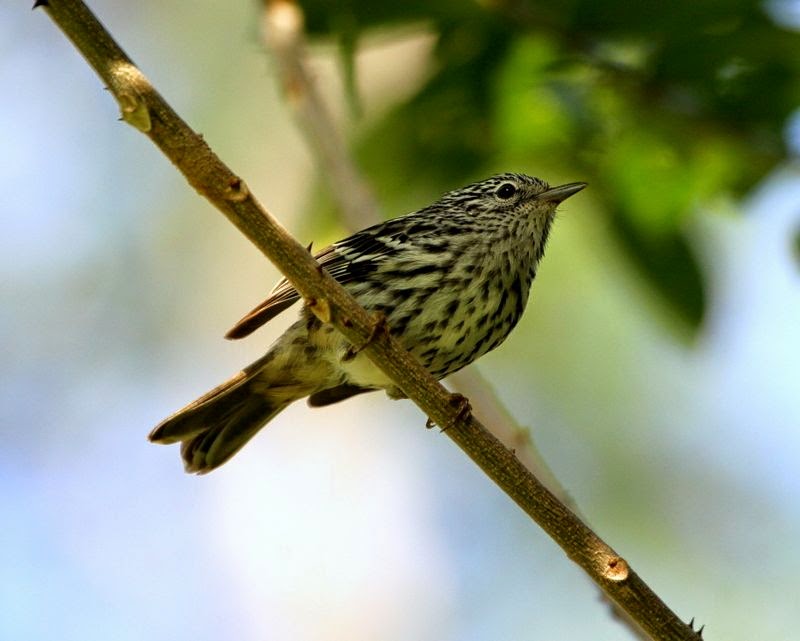
Arrowhead Warbler (Jamaican endemic)

Given the amount of time I have spent in Jamaica, you might think I would have seen all of the endemics by now, but alas I have not; Crested Quail-Dove, Jamaican Lizard-Cuckoo, Jamaican Pauraque (likely extinct), Jamaican Elaenia, Jamaican Vireo, Blue Mountain Vireo and Jamaican Blackbird have all eluded me so far. All the more reason for a return visit!

Jamaican Euphonia (Jamaican endemic)

Sunday, March 2, 2014

Peninsular Florida

Just got back from an 8 day trip to Florida. I have birded Florida a few times now, and it is always fun.

Florida is perhaps most renowned for its wading birds, and it isn't hard to see why.

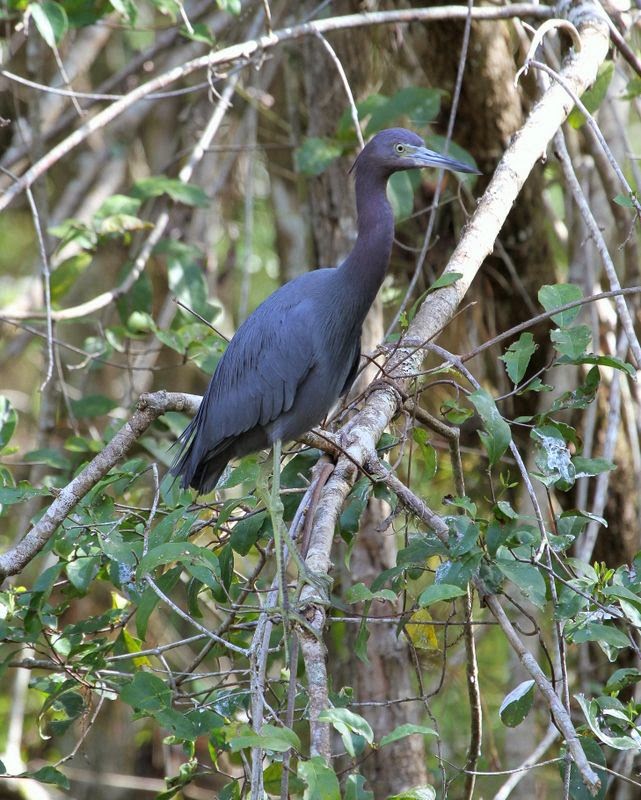
Little Blue Heron
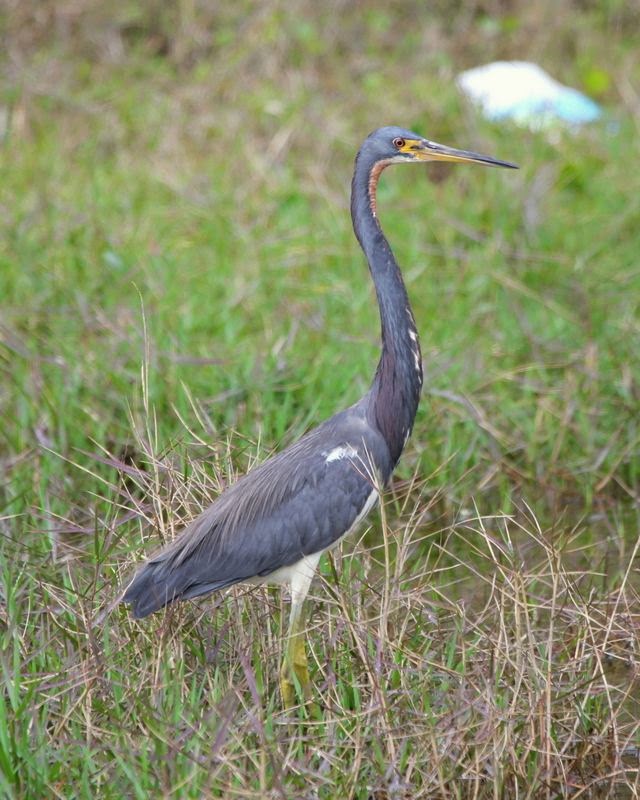
Tricolored Heron


Some of the largest concentrations of herons on the continent are to be found in the coastal mangroves and estuaries of peninsular Florida. One of the best known of such sites is the J.N. Ding Darling NWR on Sanibel Island. Unfortunately, I can't really recommend this site, since the island itself is overrun with tourists.

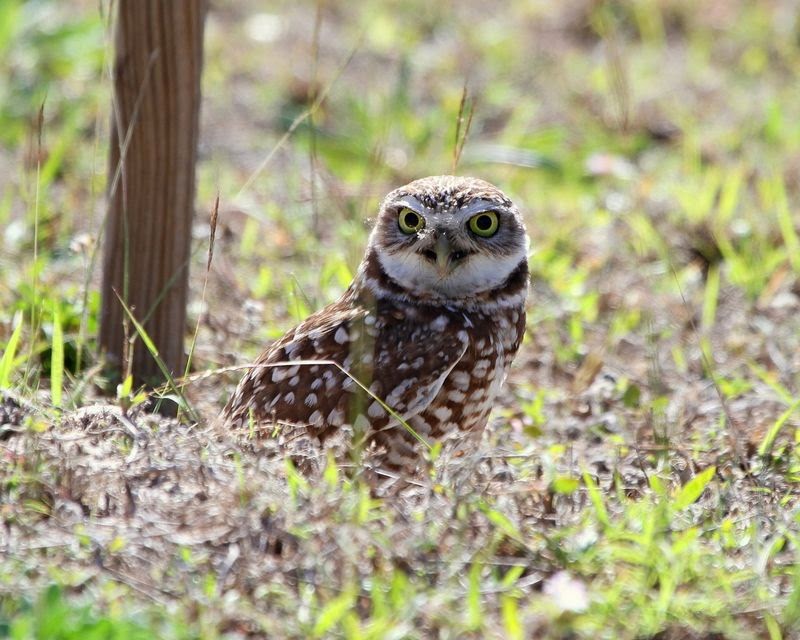
Perhaps less well known about Florida is its population of Burrowing Owls.


Burrowing Owl

Most people (rightly) associate Burrowing Owls with the mid-west, but there is a disjunct population in Florida that persists despite intense development pressure on its preferred habitat. We observed this guy in the area of Cape Coral which boasts the highest density of Florida Burrowing Owls, though they can be found elsewhere such as Tiger Tail Beach.


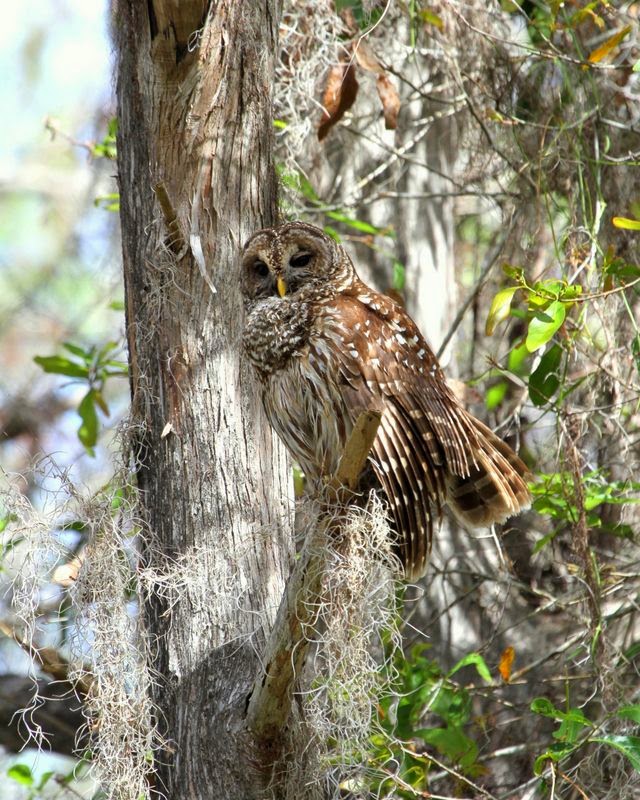
Barred Owls are another bird that you might not associate with Florida despite the fact that they inhabit Cypress swamps in high densities. Florida Barred Owls seem especially cooperative for photographers!


Barred Owl

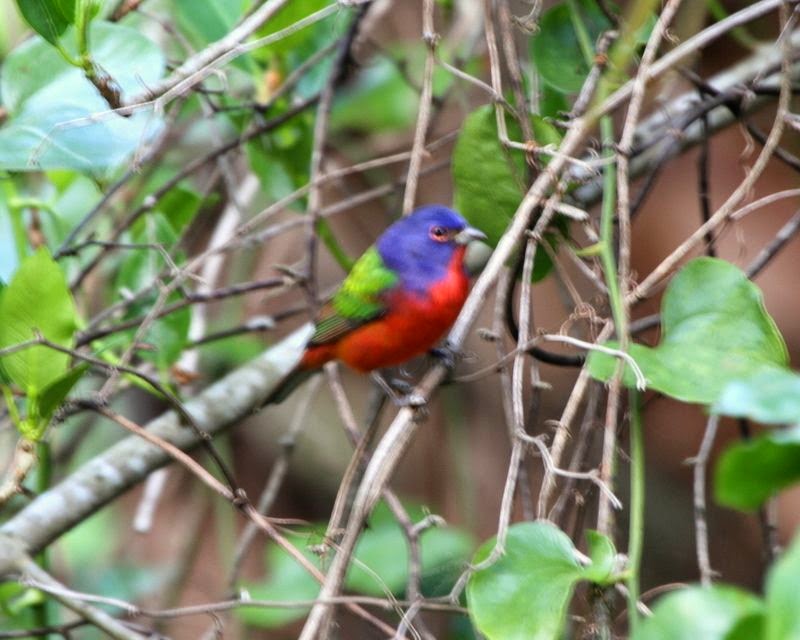
On this trip we visited the Corkscrew Swamp Sanctuary for the first time. This site has hosted the largest colony of Wood Storks in the past, and is also known as the site where visitors can observe the rare Ghost Orchid (though they bloom during summer). We didn't see too many birds here, though the sight of Painted Buntings was a highlight of the trip.


Painted Bunting

Florida is also known to birders for its Psittaciformes (parrots). There are no longer any parrots native to Florida (Carolina Parakeet being extinct) however there are a wide assortment of exotics in the State, some of which have established themselves and are "countable" for your life list. Chiefly among these are Nanday Parakeet and Monk Parakeet.


Nanday Parakeet

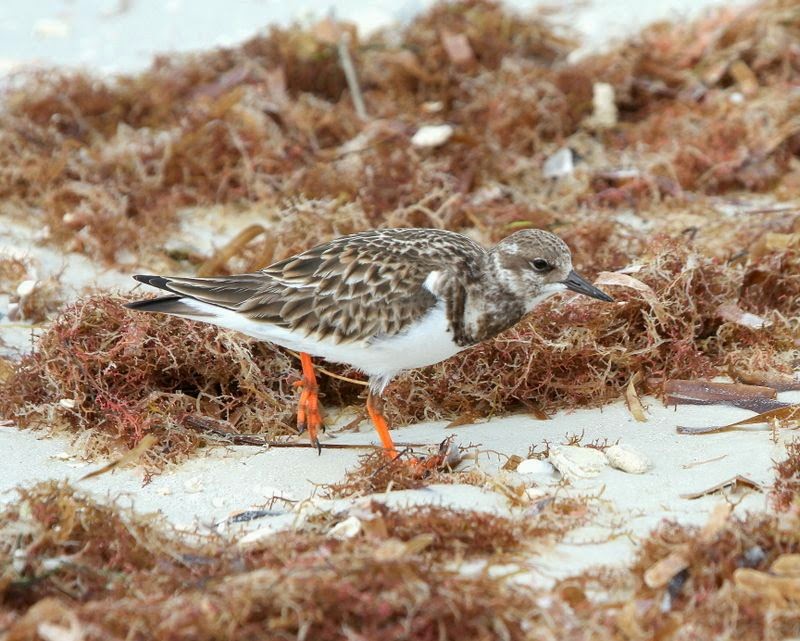
Beach birds are, of course, one of the attractions here, particularly the wintering and resident larids and shorebirds.


Royal Tern


Ruddy Turnstone

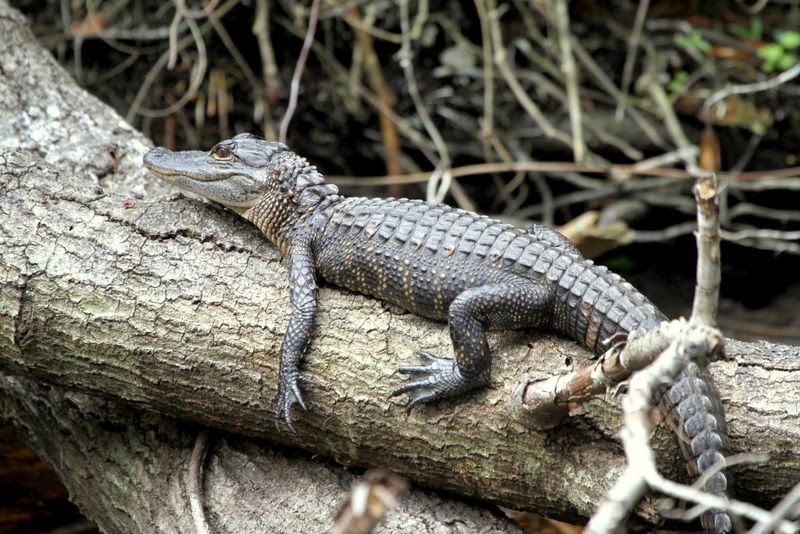
What would Florida be without its gators! This is just a little guy.


American Alligator

Sunday, October 27, 2013

Caspian Tern Band Encounter

Back in August, I saw a banded Caspian Tern at Ellacott Lookout (a.k.a. Hespeler Mill Pond). This is the location where I discovered Great Egrets roosting a few years ago during their post-breeding dispersal.


I snapped these two crumby phone camera shots of the bird through my scope. You can just barely make out the letter band combination on the bird's right leg ("AEA") in the cropped frame below.


I submitted it to the banding office and I just received a reply on Friday.


The bird was banded as a nestling in 2008 at Gull Island (Presqu'ile Provincial Park). According to the Cornell Lab of Ornithology, the longevity of a Caspian Tern on the Great Lakes is 12 years, and the longest lived Caspian Tern on record is 26 years. So this guy is still a youngster!

Friday, October 25, 2013

Confessions of a Recovering Chase-o-holic

Brown Booby in Fort Erie. I decided I wasn't going to chase this one.

Brown Booby - Offshore Waters, San Diego, CA

After almost two weeks of daily email updates about the bird my self-restraint was weakening. Voices began telling me that it would be easy to leave work a few hours early on a week night or postpone some of the housework. Almost unconsciously I started to dream up justifications and search for gaps in my calendar.

Ultimately, I caved in. We went last Sunday afternoon. We arrived in Fort Erie at 4:45 p.m. just in time for an email alert that the bird was standing on one of the footings of the railway bridge on the US side. Ten minutes after arriving, we watched as she took flight, soared over Canadian waters close to shore, and disappeared towards Lake Erie.

I'm so ashamed of myself.

Wednesday, October 9, 2013

Rattray Marsh Receives Restoration Funding

Great Lakes wetland habitat protection got a boost this week with the announcement that Rattray Marsh will receive federal restoration funding. The announcement was made by Credit Valley Conservation, the authority responsible for management of the conservation area. In addition to the federal funds, Rattray Marsh has received funds from other sources for the restoration work (including funds from Peel Region - my employer).

Rattray Marsh is one of a chain of important lake shore parks that provide migrating birds with important stopover habitat. For birders, Rattray Marsh is a migration hotspot, and in recent years there have been some rarities sighted here as well including Prothonotary Warbler and Yellow-throated Warbler.

The restoration work seems to relate mostly to marsh/fisheries, so perhaps this announcement is more significant for marsh birds and shorebirds than songbirds. Hopefully they don't damage the woodlands during the marsh restoration!

Tuesday, October 8, 2013

Carden Alvar Trail Map

The Carden Alvar is becoming more accessible to birders. With a number of trails now open to the public, gone are the days of being restricted to the limits of the road right-of-way. Couchiching Conservancy has even produced trail guide for visitors which is reproduced below.