Wednesday, May 23, 2012

Hooded Warbler - Not at Risk

Some good news arising out of this month's COSEWIC Wildlife Species Assessment Meeting. The Ontario Hooded Warbler population (the only population of Hooded Warbler in Canada) has be de-listed and is no longer considered at risk. The rationale for the decision is that the known range and abundance of the Ontario population has expanded since this species was last assessed, and also Hooded Warbler has shown a long-term increase in abundance in its core range.

Hooded Warbler
(with apologies to Charley Harper)


In the not-so-good news category, Baird's Sparrow and Buff-breasted Sandpiper have been added to the list of Species at Risk under the status Special Concern. For a detailed summary of the results of the May 2012 COSEWIC Wildlife Species Assessment Meeting click here.

Monday, May 21, 2012

Piranga

In my mind the Victoria Day long weekend marks the time when spring migration gives way to the breeding season in earnest. Today at Long Point and environs we were mostly on the hunt for breeding birds (i.e. Black Tern, Forster's Tern, Cerulean Warbler, Hooded Warbler). So imagine our delight when we came across this stunning second year make Summer Tanager. It paid to make a stop at Long Point P.P. to search for late migrants!

Summer Tanager

Of course it is only by courtesy that we even call it a "tanager" anymore; the AOU relocated the genus Piranga to the Cardinal family in 2009.

Friday, May 18, 2012

Myiarchus

Question: what Family of birds is the most speciose?

Answer: Tyrannidae (tyrant flycatchers), although you wouldn't necessarily know it from the way the Family is represented in Ontario.

According to the Handbook of the Birds of the World, there are 432 species of tyrant flycatchers, all of which are endemic to the nearctic and neotropical ecozones (a.k.a. the western hemisphere). Only 24 species have been recorded in Ontario, and of that number only 11 occur regularly. These are primarily birds of the South American continent.

Great Crested Flycatcher
(Myiarchus crinitus)
Great Crested Flycatcher
(Myiarchus crinitus)


Here is another noteworthy thing about the tyrant flycatchers: some of them are difficult to tell apart. Species in the genus Empidonax are perhaps the most notorious in this respect, but there are others. Take the genus Myiarchus for example. Since Great Crested Flycatcher is the only regularly occuring Myiarchus flycatcher in Ontario, this may not present itself as a major problem. But what is it about the bird in the above two photos that readily distinguishes it from Ash-throated Flycatcher? With the extensive, bright yellow underparts hidden from view, and the tip of the tail somewhat obscured by shadow, the best field mark is probably the broad white edges to the tertial feathers (the wing feathers closest to the body).

Tuesday, May 8, 2012

American Woman

I mean... Lady.

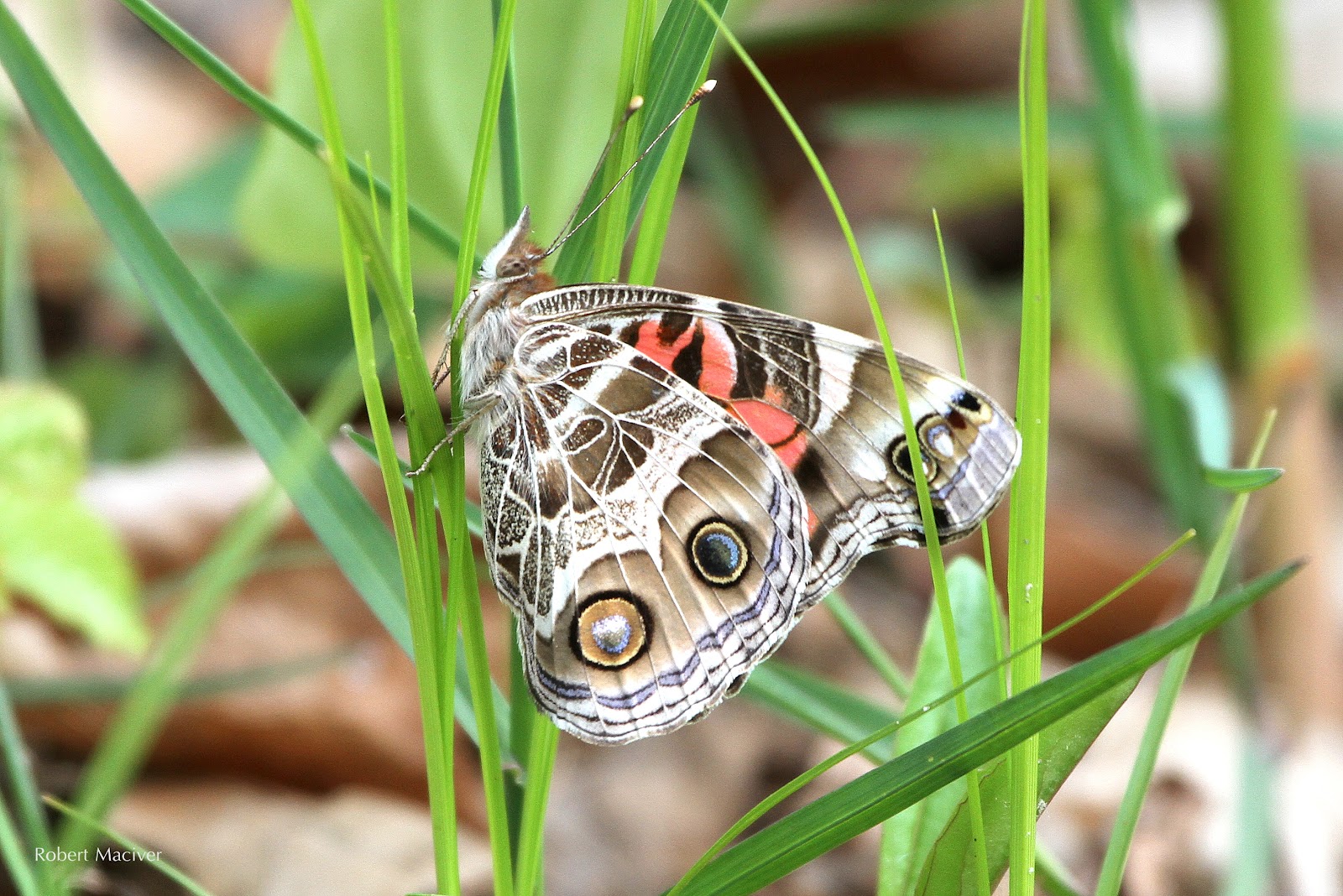
Just a short post to mention the already widely publicized butterfly invasion underway this Spring.

American Lady (Vanessa virginiensis)

Sunday, May 6, 2012

Shorebird Dimorphism

Sexual dimorphism is a phenomenon exhibited by a wide variety of animal taxa, including birds. What this refers to is differences in morphology that divide species roughly along the lines of gender. The aspect of avian sexual dimorphism familiar to many of us is plumage colour dimorphism; in many species, the body feathers of male birds are more brightly coloured than in females. Sometimes the males also show elaborate ornamentation which the females lack. This is epitomized by members of the family Paradisaeidae (birds-of-paradise).

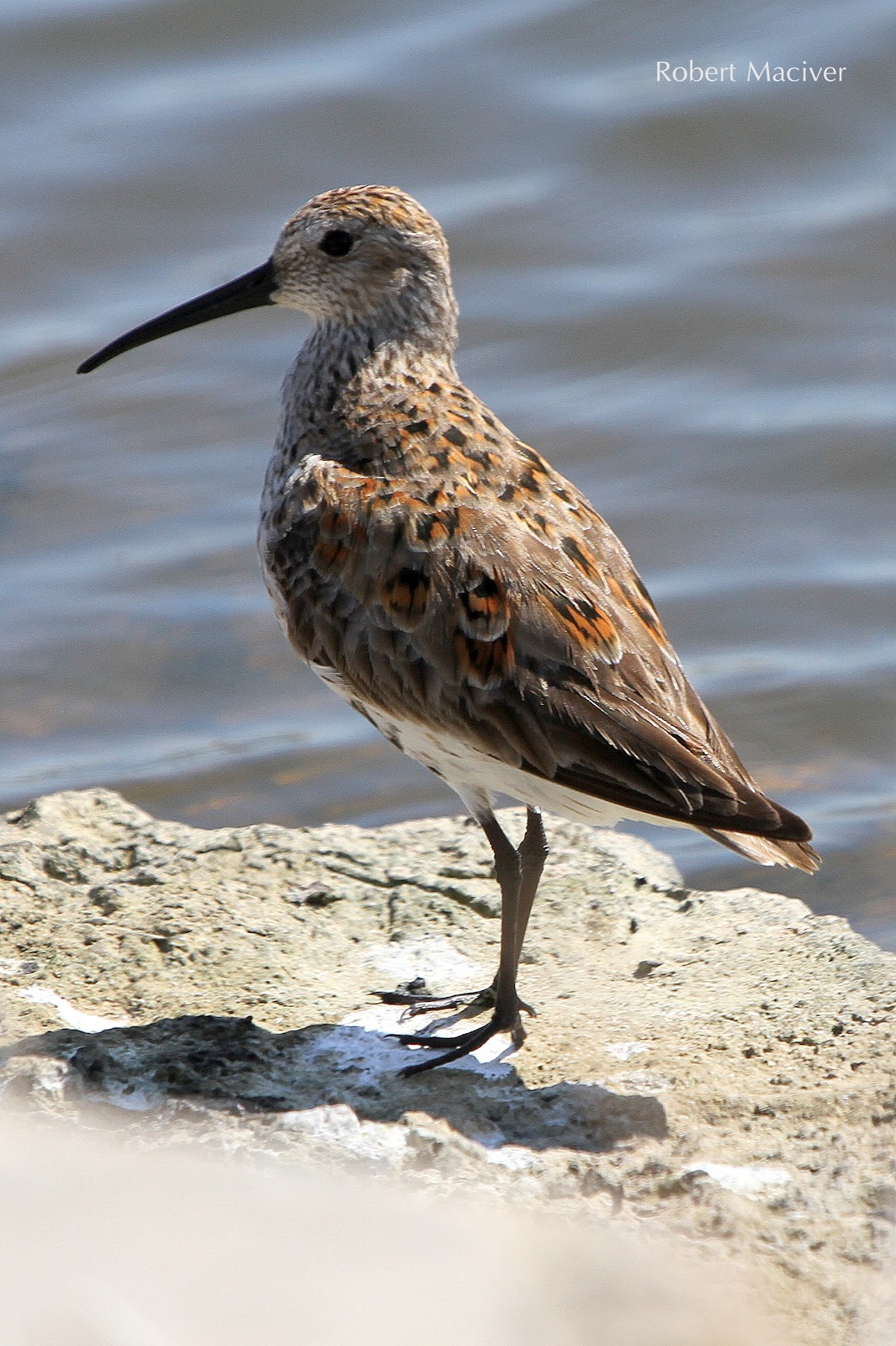
A lesser-known aspect of sexual dimorphism in birds is the difference in average bill length between males and females in many shorebird species. Though we tend to associate greater size with the male of the species, in this instance the female has the longer bill (on average).


Dunlin (♂)
Dunlin (♀)


The photographs above are a nice illustration of the difference in bill length between two Dunlin that Hannah & I observed yesterday at Blenheim Sewage Lagoon. In diagnosing these birds as male and female based on bill length, it is important to add the qualification that these differences are based on statistical averages and there is a degree of overlap. Nevertheless the difference in bill length in the two birds depicted above is acute enough that we can ascribe gender to each bird with a reasonable amount of confidence.

Saturday, April 28, 2012

Little Grouse on the Prairie

During this trip, I was able to observe five different lekking grouse: Greater Sage-Grouse, Gunnison Sage-Grouse, Sharp-tailed Grouse, Lesser Prairie Chicken & Greater Prairie Chicken. The final lek of my trip was of the Greater Prairie Chicken which was situated on private ranch land. The property is owned by Bledsoe Cattle Company, a large operation that produces beef primarily for the Japanese market.

Greater Prairie Chicken

Displaying Greater Prairie Chickens inflate their throat sacks and raise their specialized neck feathers (called pinnae) to a vertical position. They also engage in a dancing behaviour which is not quite as energetic as Sharp-tailed Grouse, but is more so than the two Sage-Grouse taxa.

Greater Prairie Chickens Face Off

Interestingly, all five prairie grouse taxa share a very close genetic affinity, despite the morphological differences which are apparent between displaying males of each species. The rate of morphological modification in a population is known to outpace genetic change in species, like these grouse, which exhibit a strong pattern of sexual selection.

Friday, April 27, 2012

Loveland Pass

A fruitless search above the timberline for White-tailed Ptarmigan (documented by my friend Matt in slow motion video).