Saturday, March 7, 2015

Getting Out of Dodge

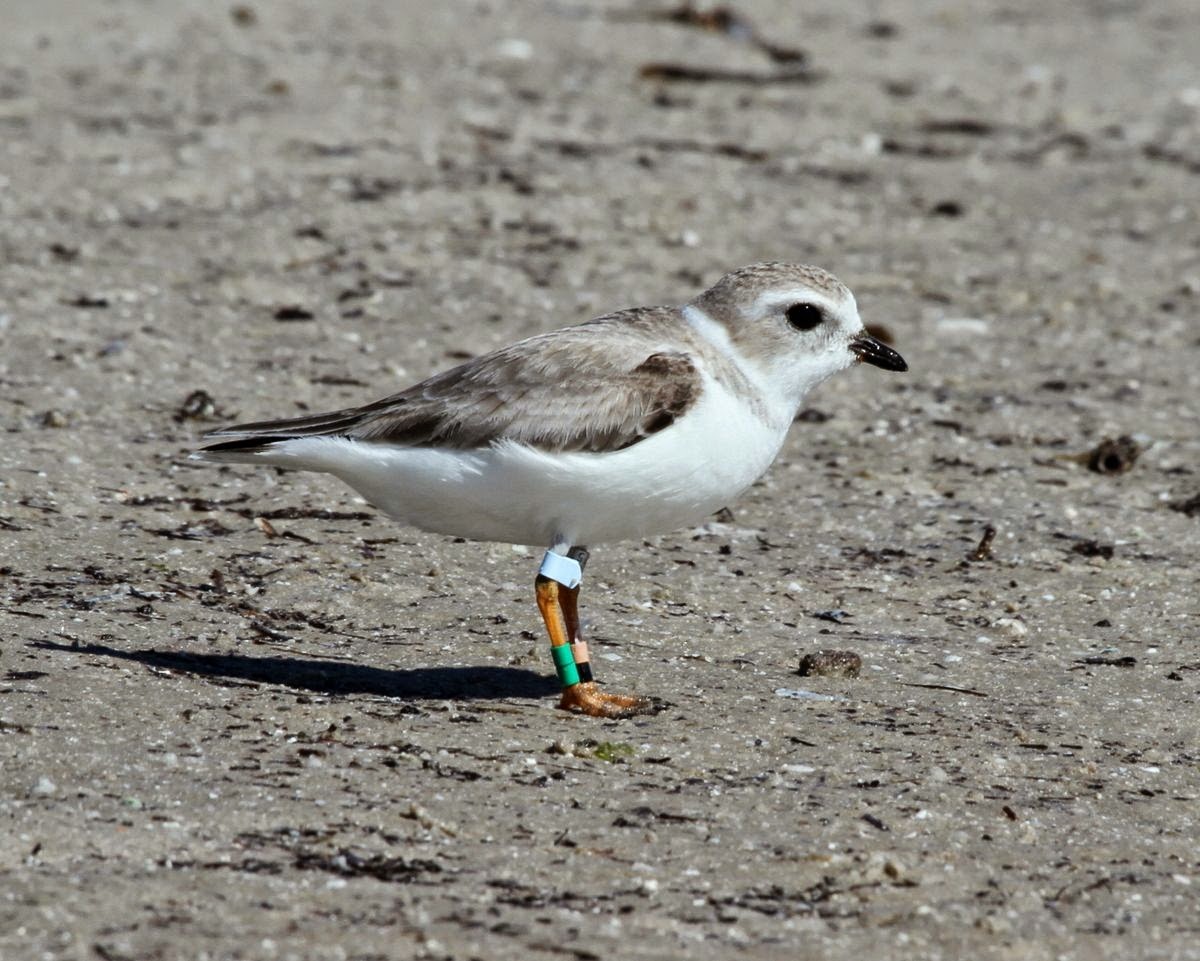
During our recent visit to Florida, we encountered a banded Piping Plover at Howard Park near Tarpon Springs. Hannah immediately recorded the colour band combination in her notebook, and later I was able to obtain a photograph.


Pimped-out Piping Plover

The upper left leg has a metal USGS numbered band. The lower left leg has an orange auxiliary band over a black band. The lower right leg has two green bands, and the upper right leg has a light blue "flag".

The flag is important because no two regions where these birds are banded will use the same colour. In this case light blue denotes that the bird was banded in the vicinity of the Platte River by staff from the Nebraska Game & Parks Commission. More particularly, it was banded in Dodge County, Nebraska. If I was him I would want to get out of Dodge for the winter too!

We submitted the information about our encounter to Patuxent Bird Banding Laboratory and received a reply shortly thereafter with some additional details together with the standard "certificate of appreciation". This individual bird was banded as a hatchling on July 1, 2014. It is interesting that a Piping Plover originating from the Great Plains population would spend the winter on the Florida Gulf coast. I would otherwise have assumed that birds from the prairie population spend the winter in Texas and that this was a bird from the Atlantic coast breeding population.


Sunday, February 15, 2015

Other Florida Specialties 2015

Here are some more feathered Floridians!

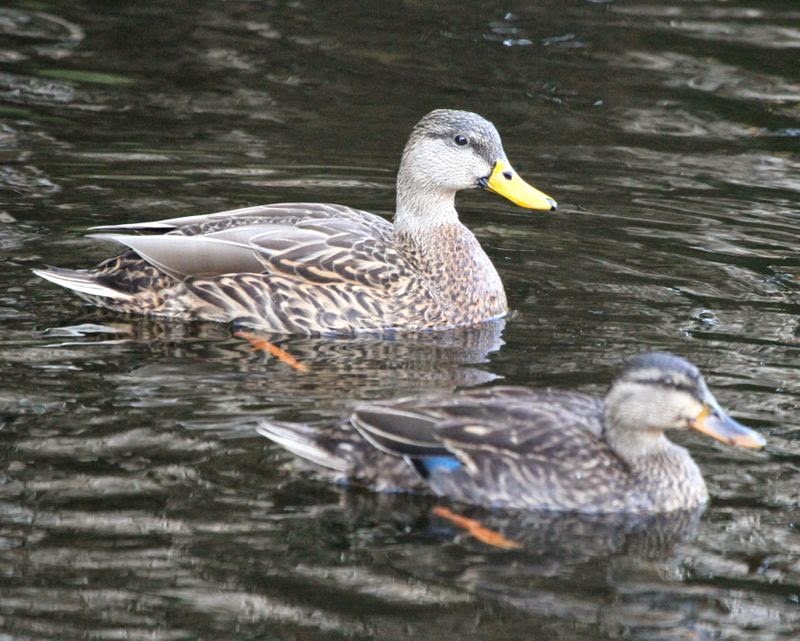
Mottled Duck (rear) with feral Mallard (front)

To many, the Mottled Duck might appear boring, blending in with the now globally ubiquitous Mallard. Historically, the breeding range of the Mottled Duck was separated from that of Mallard and Black Duck without a zone of hybridization. Mallards have gradually encroached to the point that doubts have been raised about the future genetic integrity of Mottled Duck as a species.

*Update: after reviewing the timely article on eBird found here, the putative Mottled Duck above actually shows some indications of a mixed genealogy. In particular, the extensive streaking in the cheek together with the appearance of white edging in the tail feathers suggests some unknown degree of Mallard ancestry.


Wood Stork

Wood Storks are not the baby-delivering kind of European fable, but rather an unrelated New World taxon. Genetic analysis confirms that Wood Storks have greatest affinity with the New World Vultures, Pelicans, Ibis and...


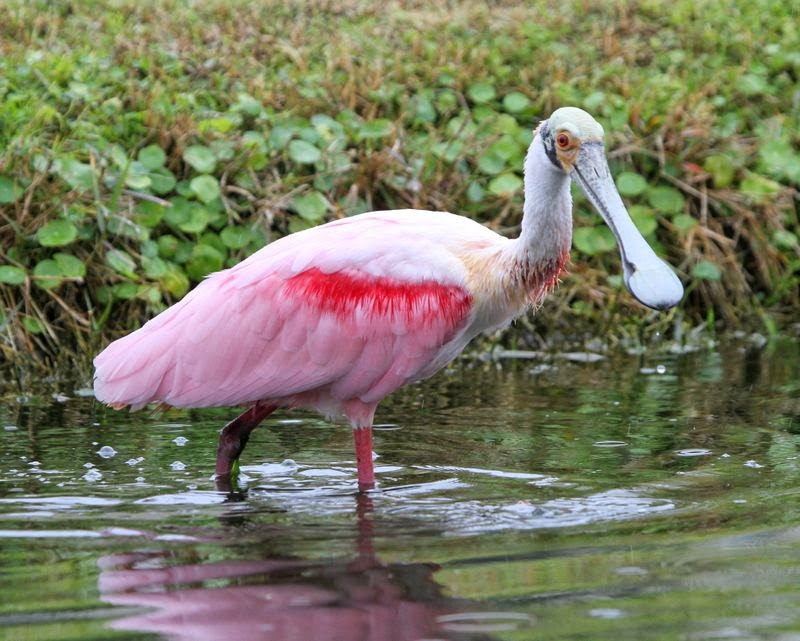
Roseate Spoonbill

...Roseate Spoonbill whose pinkish colouration is thought to be derived from its diet, like that of the American Flamingo.


Limpkin

Somewhat of an taxonomic anomaly, the Limpkin is not quite a rail, not quite a crane and not quite anything else! In fact it has been assigned to a taxonomic family all unto itself (Aramidae). The geographical range of the Limpkin includes most of the Caribbean, Central and South America, and Florida is the only place in North American where it occurs with regularity.


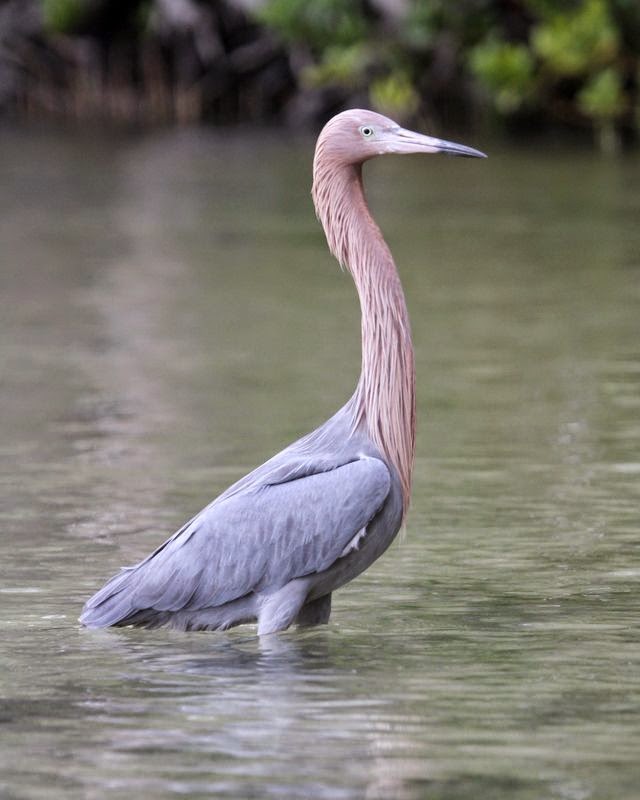
Reddish Egret

To me, the Reddish Egret is the most charismatic of the North American herons. Unlike most herons that forage with precise and deliberate movements, the Reddish Egret "dances" frenetically with its wings open; a behaviour thought to flush its fish, frog & crustacean prey.


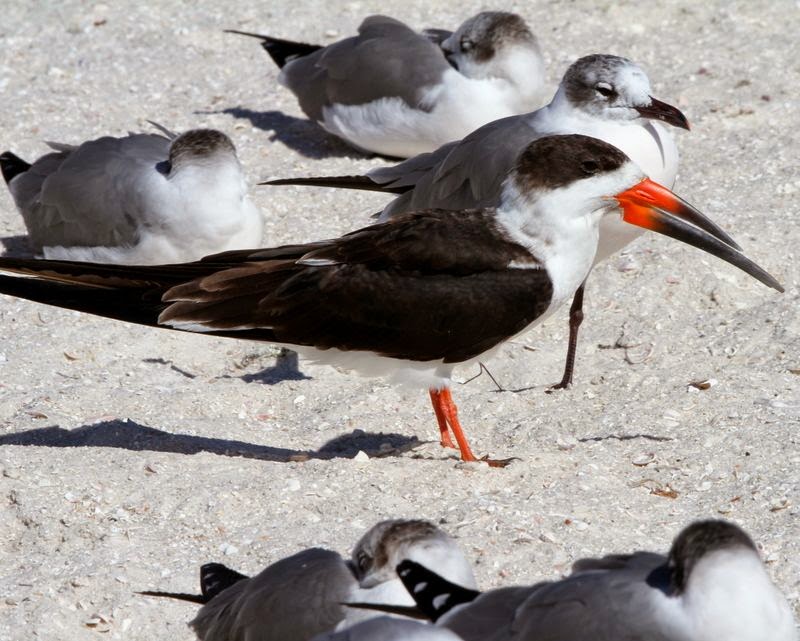
Black Skimmer

Here's a bizarre one; in order to catch fish, the Black Skimmer drags its elongated lower mandible across the surface of the water while flying.


Sandwich Tern

Sandwich Terns are such a nicely proportioned tern, and the yellow tipped, black bill is a distinct field mark.

Sunday, February 8, 2015

Florida Shorebird Spectacular

We were in Florida again this winter and the shorebirding was particularly good. Here are some photo highlights...

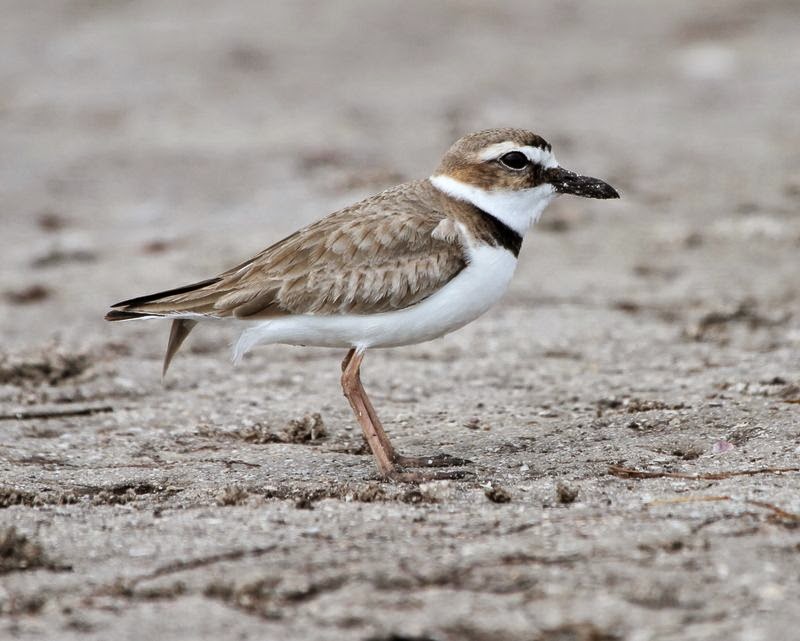
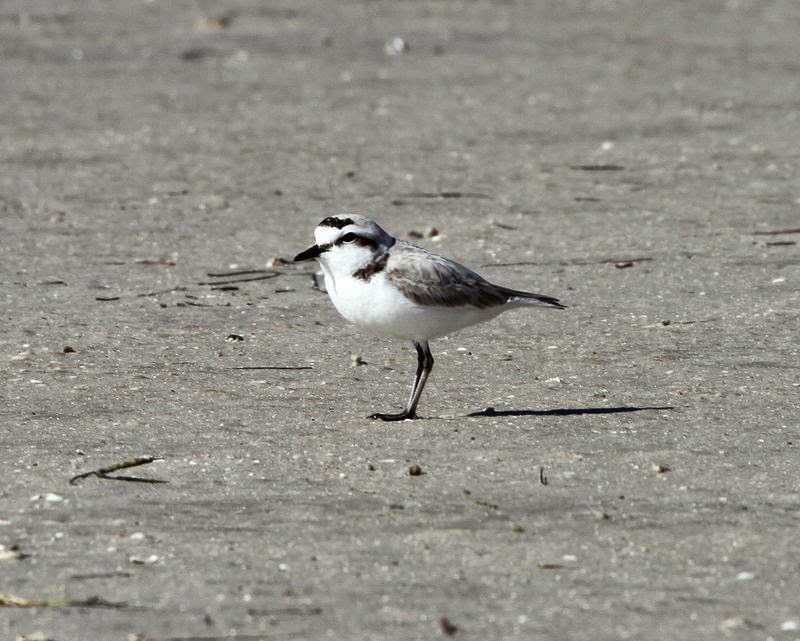
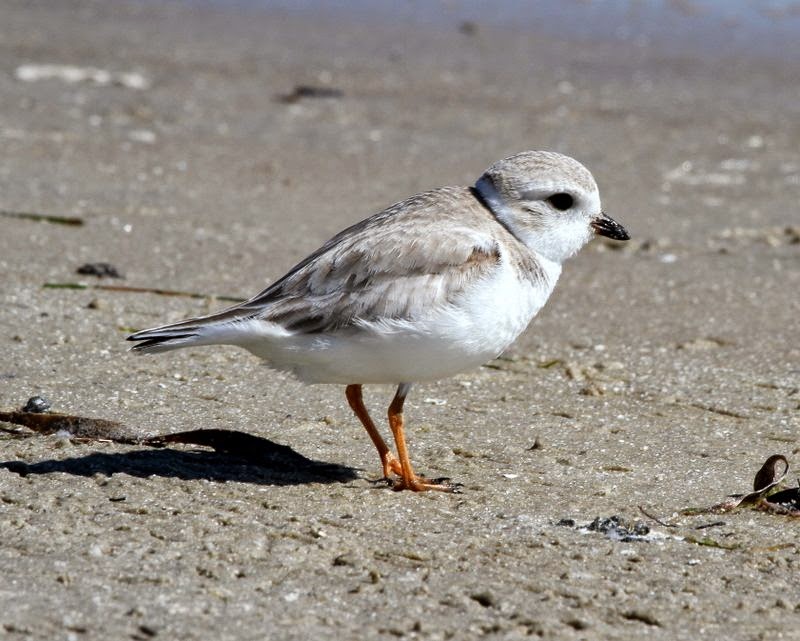
We had a sweep of the four regularly occurring North American "small belted plovers". Here are photos of three of them (quiz: what's the fourth?)

Wilson's Plover

Snowy Plover

Piping Plover

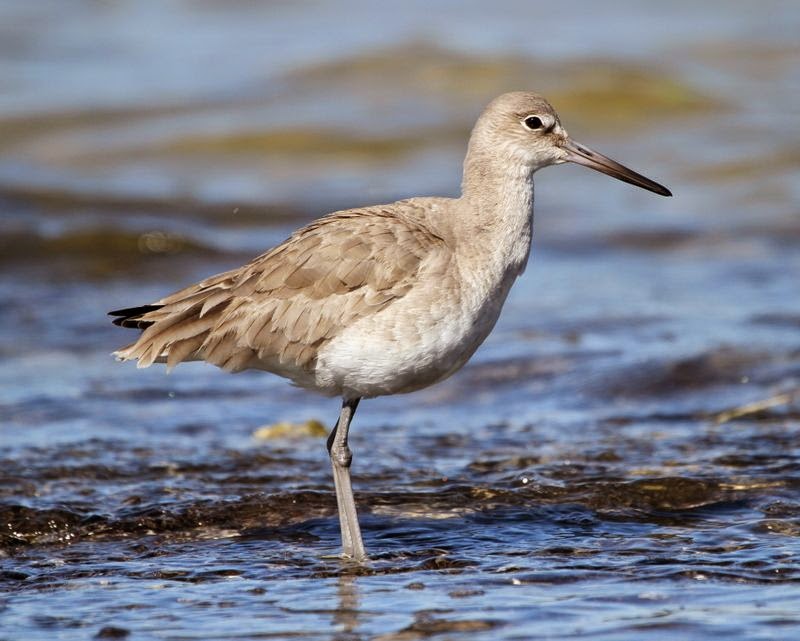
Willets were plentiful along the coastline and posed nicely for the camera.

Willet

We took a tourist boat to Anclote Key Preserve State Park; an offshore gulf coast barrier island only accessible by water. These barrier islands are important habitations for wintering shorebirds. While there, Hannah discovered a previously unreported Long-billed Curlew; North America's largest sandpiper which regularly but sparsely occurs in winter on the Florida Gulf Coast. We received some "eyebrows raised" emails from the local eBird police for submitting this one ("what you saw was almost certainly a Whimbrel"). Luckily I had the photo evidence.


Long-billed Curlew

While roaming the beach at Howard Park in northern Pinellas County, we startled a pair of American Oystercatchers that were sleeping in the tidal wrack line.

American Oystercatcher

Notice the peculiar shape of the pupil in the bird above. The dark "fleck" which occurs in both American and Black Oystercatchers (and less prominently in other taxa) is thought by some researchers to be a sex-linked trait indicative of a female bird.*

* Reference: Guzzetti, B.M., Talbot, S.L., Tessler, D.F., Gill, V.A., and Murphy, E.C. 2008. Secrets in the eyes of Black Oystercatchers: a new sexing technique. Journal Of Field Ornithology 79 (2): 215-223.

Sunday, September 21, 2014

Sanderling Sings the Blues

I have been hearing bits and pieces about a decline in the population of Sanderlings and decided to search the internet for some authority on the subject.

Sanderling

Here is what I found. The report does indeed signal population declines. I kind of like this photo because it depicts a Sanderling in the process of molting from the warm, brown tones of its breeding plumage to the cool, grey tones of its non-breeding feathers. I took this photo last weekend at Turkey Point.

Tuesday, July 1, 2014

BBS 68-902

Bobolink


I have been assigned to Breeding Bird Survey Route 68-902 for the past five years, so I thought I would post a brief synopsis of the results over that time period.

Date range
June 4 – June 27
Cumulative species total
79
Average # of species
56.4
Maximum # of species
62
Minimum # of species
52
# of species recorded exactly once
14
# of species recorded in all years
34
Noteworthy species unrecorded
SSHA, BAEA, AMKE, MAWR

The 40 km route commences in south Cambridge and zigzags down the Grand River to Paris where it terminates. After five years, I have decided to retire from this route so it is available next year if anyone wants to take it over. For more information about the Breeding Bird Survey and its almost 50 year history check this link. To search for vacant BBS routes check here.

Saturday, June 14, 2014

The Wren House and a New Yard Herp

House Wren

When I installed a bird house on our fence this spring, I thought it would be merely ornamental. To my surprize, a House Wren has occupied it and he appears to have a mate. Since House Wrens are known to build multiple dummy nests, I am not totally sure whether there is an actual nest inside, but the behaviour of the birds suggests that it might. I guess there is one easy way to find out (i.e. open up the box) but we don't want to disturb it if in fact there are eggs/nestlings inside. We will just have to pay attention and see what emerges.

Dekay's Brownsnake (Storia dekayi)

Hannah was seeing a Brownsnake in the garden a few mornings in a row, which is a new snake for our yard bringing the total number of snake species to two.


Above is a distribution map from the Ontario Reptile and Amphibian Atlas, showing that Dekay's Brownsnake is unevenly distributed within southern Ontario.

A Jamaican Lep

I was only able to get one decent photo of a butterfly in Jamaica.


Malachite (Siproeta stelenes)

I would have liked to get a photograph of the Jamaican Giant Swallowtail (the largest swallowtail butterfly in the Americas) but it is extremely rare.